
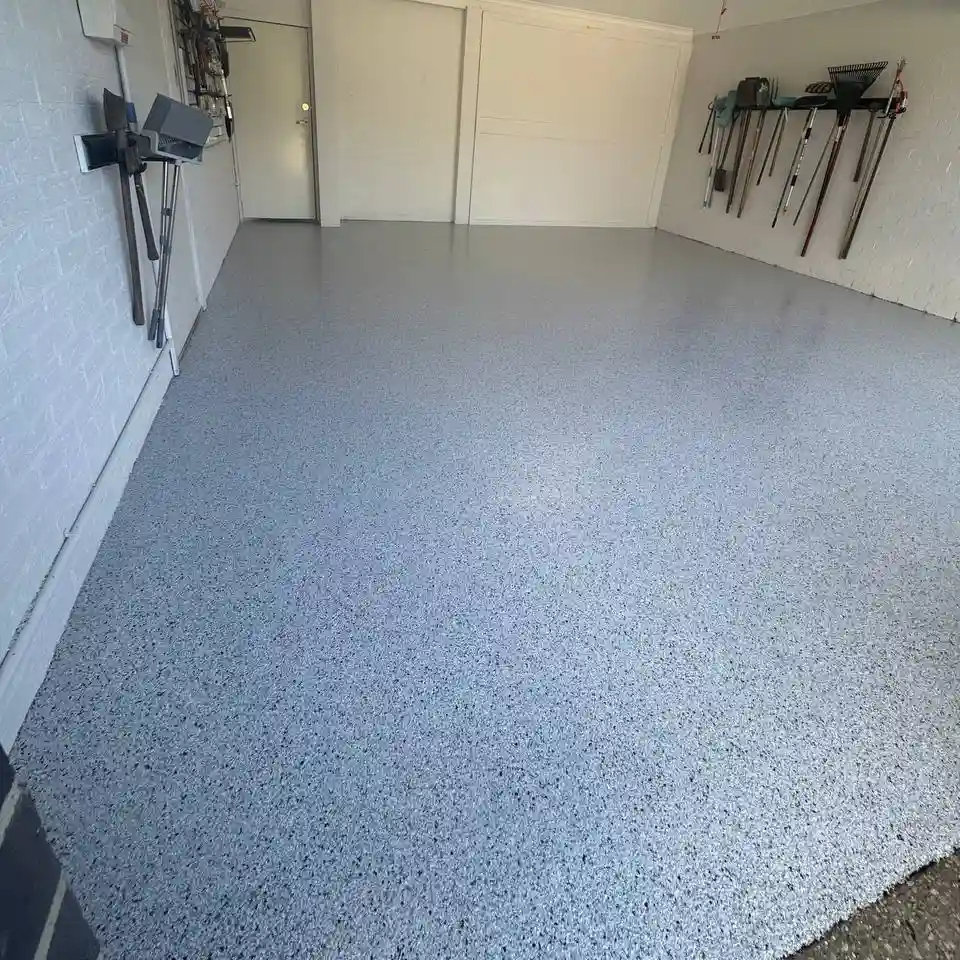
You’ve seen it in the neighbours’ garage. That sleek, high-gloss finish that transforms a dull concrete slab into something that looks like it belongs in a car showroom. Now you want it too — and the first question most Melbourne homeowners ask is: should I do this myself, or call a professional?
It’s a fair question. The DIY epoxy kits at Bunnings look straightforward enough. But there’s a big gap between how epoxy flooring looks on the packet and how it performs on your garage floor six months later. In this guide, we cut through the noise and give you the honest picture — common mistakes, real results, and how to make the right call for your situation.
What Is Epoxy Garage Flooring, Really?
Epoxy floor coating is a two-part system — a resin and a hardener — that chemically bond when mixed to create an incredibly hard, glossy surface over your existing concrete. Once cured, it resists oil spills, tyre scuffs, moisture, and heavy foot traffic. It also looks great, and a properly installed floor can last 10 to 20 years.
That last part — ‘properly installed’ — is where things get complicated.
There are a few types of garage floor epoxy coating commonly used in Melbourne homes: water-based epoxy (easy to apply, less durable), solvent-based epoxy (stronger bond, more fumes), and 100% solids epoxy (the most durable, used almost exclusively by professionals). The system you choose — and how you prepare the surface — determines everything.
The DIY Route: What You Can Realistically Expect
DIY epoxy garage floor kits are widely available and genuinely appealing to the handy homeowner. You control the timeline, choose your colours and finish, and there’s real satisfaction in completing a project like this yourself.
Where DIY epoxy works well:
- Small garages or single bays with minimal existing damage
- Concrete in good condition with no active moisture issues
- Homeowners willing to invest serious time in proper prep work
- Light-use spaces such as storage areas rather than daily vehicle parking
The reality, however, is that most DIY epoxy jobs underperform — not because the homeowner isn’t capable, but because retail kits are formulated differently to professional-grade products. Hardware store kits typically use water-based epoxy with low solids content, which simply isn’t built to handle the weight and movement of a vehicle parked on it day in, day out. Peeling and bubbling can appear within one to three years.
The Biggest Mistake: Skipping Proper Surface Preparation
Ask any professional epoxy flooring installer in Melbourne, and they’ll tell you the same thing: preparation is everything. It’s not glamorous, and it’s not optional.
For epoxy to bond correctly to concrete, the surface must be properly opened up — typically through diamond grinding or shot blasting. DIY kits often recommend acid etching as an alternative, but acid etching alone is rarely sufficient, especially for older slabs or concrete that’s been sealed, painted, or contaminated with oil.
Surface preparation can account for 30 to 40 percent of a professional installation’s effort. When homeowners skip or rush this step, they’re essentially applying a high-quality coating to an unprepared surface — and the result is almost always premature failure. Bubbling, lifting edges, and delamination are the most common outcomes.
Concrete moisture is another factor many Melbourne homeowners overlook. If your slab has high moisture content — common in older homes or garages without proper vapour barriers — epoxy applied over it will fail regardless of how carefully you apply it. Professional installers test for moisture and apply barriers where needed. DIY kits don’t come with this step.
Professional Epoxy Flooring: What You’re Actually Getting
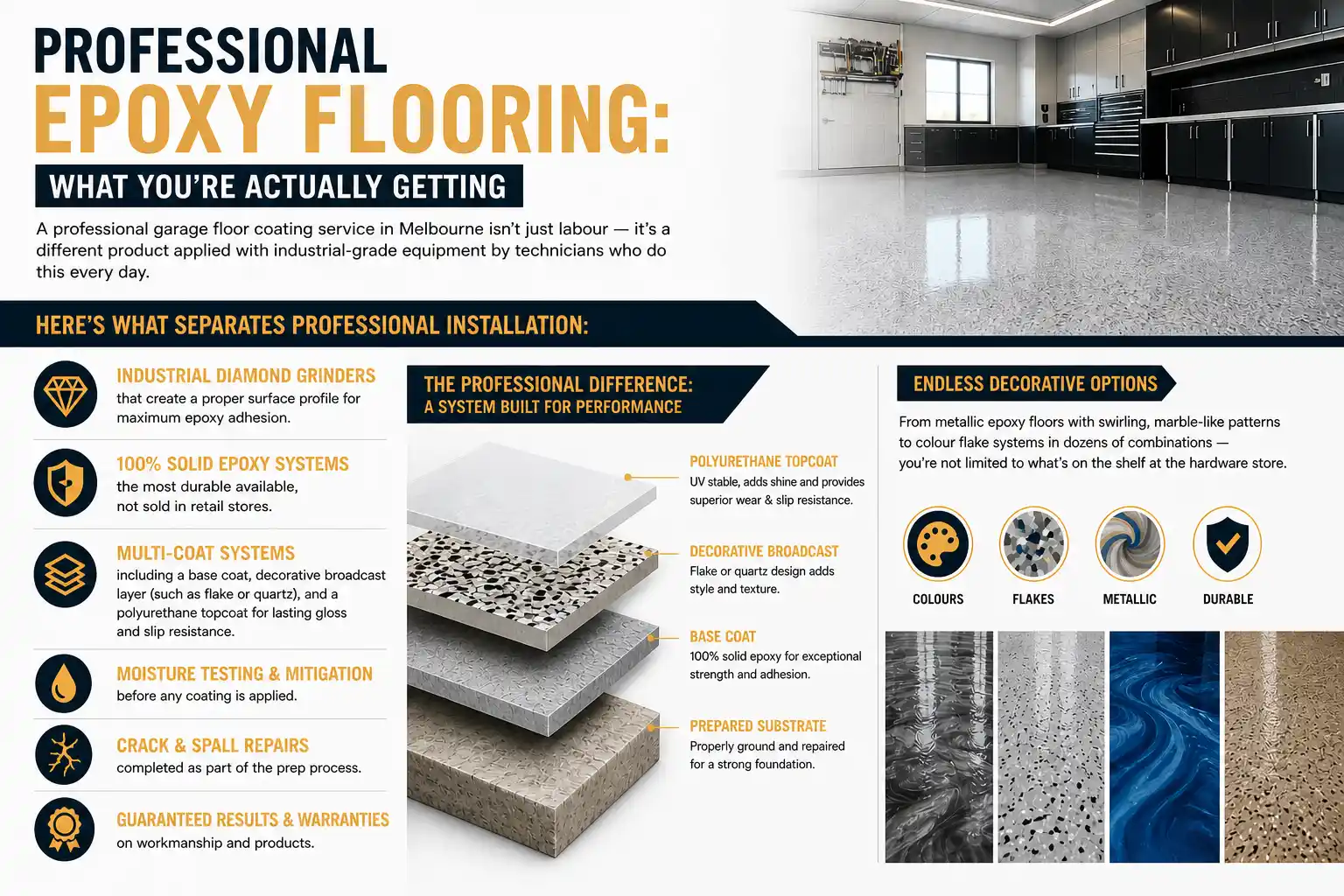
A professional garage floor coating service in Melbourne isn’t just labour — it’s a different product applied with industrial-grade equipment by technicians who do this every day.
Here’s what separates professional installation:
- Industrial diamond grinders that create a proper surface profile for maximum epoxy adhesion
- 100% solids epoxy systems — the most durable available, not sold in retail stores
- Multi-coat systems including a base coat, decorative broadcast layer (such as flake or quartz), and a polyurethane topcoat for lasting gloss and slip resistance
- Moisture testing and mitigation before any coating is applied
- Crack and spall repairs completed as part of the prep process
- Guaranteed results and warranties on workmanship
The decorative options available through professional installers are also far broader. From metallic epoxy floors with swirling, marble-like patterns to colour flake systems in dozens of combinations, you’re not limited to what’s on the shelf at the hardware store.
Common Mistakes That Ruin Epoxy Garage Floors
Whether you go DIY or hire a substandard contractor, these are the mistakes that end up costing Melbourne homeowners the most:
1. Applying Epoxy to Damp or Unsealed Concrete
Moisture is epoxy’s enemy. Even slight dampness prevents proper adhesion, leading to bubbling and peeling — sometimes within weeks of application. In Melbourne, where seasonal temperature swings and clay-heavy soils create shifting moisture conditions, this is a particularly common problem.
2. Using Low-Solids Water-Based Products on Vehicle-Traffic Areas
Retail epoxy floor paint is not the same as professional epoxy flooring. Low-solids products degrade quickly under tyre pressure, especially in hot spots where a vehicle sits stationary. Hot tyre pick-up — where the coating literally lifts off the floor attached to a warm tyre — is one of the most common complaints from DIY epoxy projects.
3. Not Allowing Full Cure Time
Epoxy has two stages: dry-to-touch and fully cured. Driving on it or placing heavy objects on it before full cure (which can take 5–7 days) significantly weakens the final surface. Melbourne’s cooler winter temperatures also slow curing times — something professional installers account for and DIYers often don’t.
4. Ignoring Existing Cracks and Surface Damage
Epoxy doesn’t fill or hide structural problems — it follows the surface beneath it. Cracks, spalling, and uneven areas need to be repaired before coating. Skipping this creates weak points in the finished floor where lifting and cracking will begin.
DIY vs Professional: The Honest Comparison
Here’s a straightforward comparison to help you decide:
- Durability: DIY — 1–3 years typical for retail products under vehicle use | Professional — 10–20+ years with professional-grade systems
- Finish quality: DIY — Variable — highly dependent on prep skill | Professional — Consistent, smooth, professional result
- Product grade: DIY — Water-based, low solids | Professional — 100% solids epoxy with polyurethane topcoat
- Surface prep: DIY — Acid etch (insufficient for most slabs) | Professional — Diamond grinding, moisture testing, crack repair
- Slip resistance: DIY — Minimal — small flake for aesthetics only | Professional — Engineered flake broadcast for AS 4586 slip ratings
- Warranty: DIY — None | Professional — Workmanship and material warranties included
- Best suited for: DIY — Light-use storage areas, tight budgets, handy homeowners | Professional — Vehicle parking, high-traffic garages, long-term investment
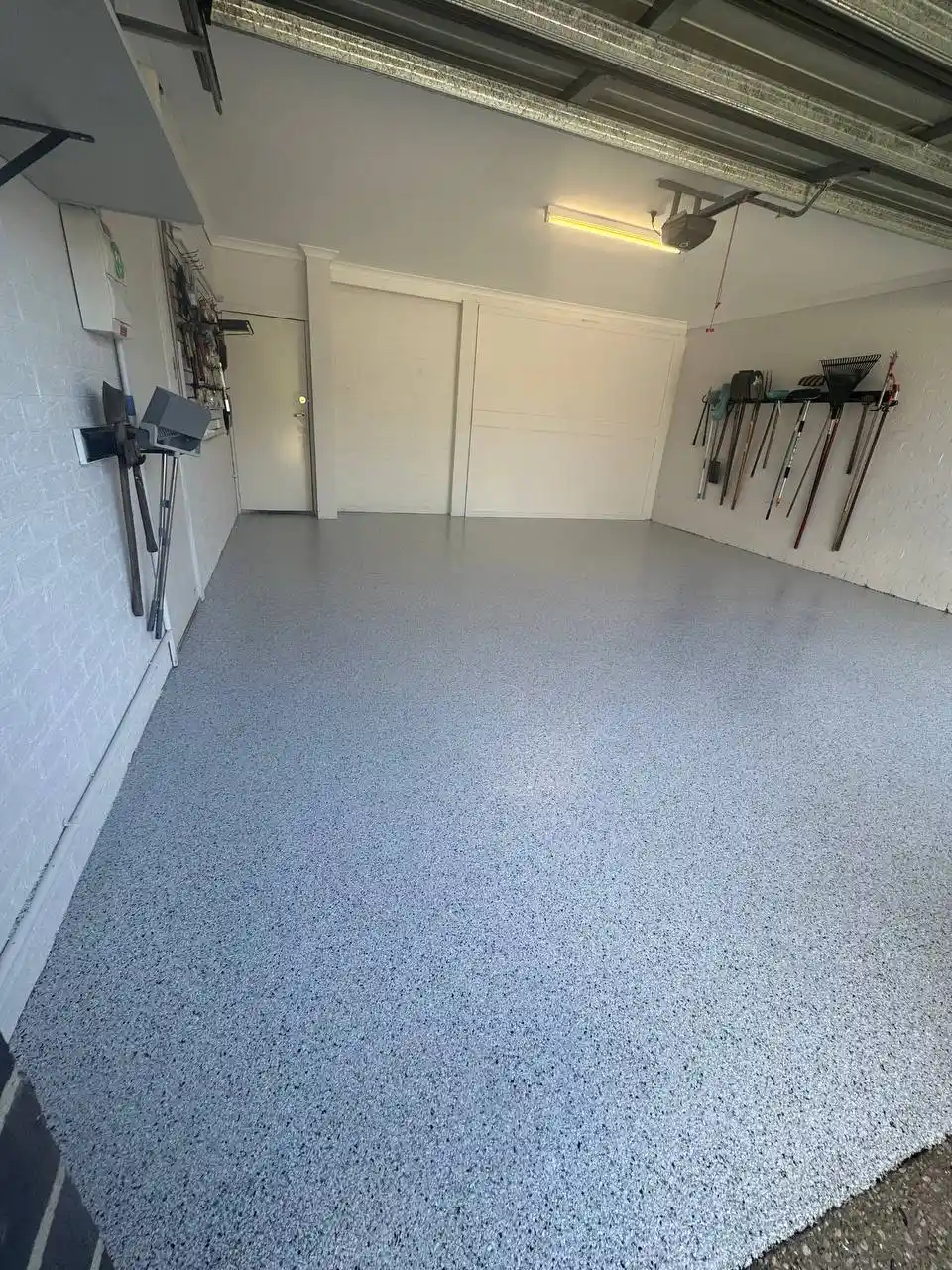
Melbourne-Specific Considerations
Melbourne’s climate adds another layer of complexity to epoxy garage floor installation. The city’s notorious four-seasons-in-one-day variability, combined with high UV exposure in summer and cold, damp winters, creates challenging conditions for both application and long-term performance.
Humidity affects curing. Temperature affects pot life — the window you have to apply the mixed epoxy before it begins to harden. In summer, high temperatures can shorten that window dramatically. In winter, curing slows and adhesion can be compromised if temperatures drop below the recommended range.
Professional epoxy installers operating in Melbourne understand these variables and adjust their materials, timing, and process accordingly. It’s one of the less obvious advantages of hiring someone with genuine local experience.
So, Which Should You Choose?
If your garage is a light-use storage space and you’re willing to redo the floor in a few years, a DIY epoxy kit applied with proper preparation can be a reasonable option. Take the surface prep seriously, don’t rush the curing time, and manage your expectations around longevity.
If your garage is where you park your car every day, you want a result that lasts, or you have an older slab with existing damage or moisture issues — professional installation is the clear choice. The materials are better, the preparation is more thorough, and the results speak for themselves in both appearance and longevity.
A well-executed epoxy garage floor is one of those upgrades that genuinely adds value to your property. Melbourne real estate agents consistently note that a polished, sealed garage floor signals to buyers that a home has been well cared for. It’s a small detail with a disproportionately positive impression.
Ready to transform your Melbourne garage? Melbourne Garage Epoxy offers free on-site quotes across Melbourne and surrounding suburbs. Get in touch with our team at melbournegarageepoxy.com.au to discuss your concrete floor coating options.