
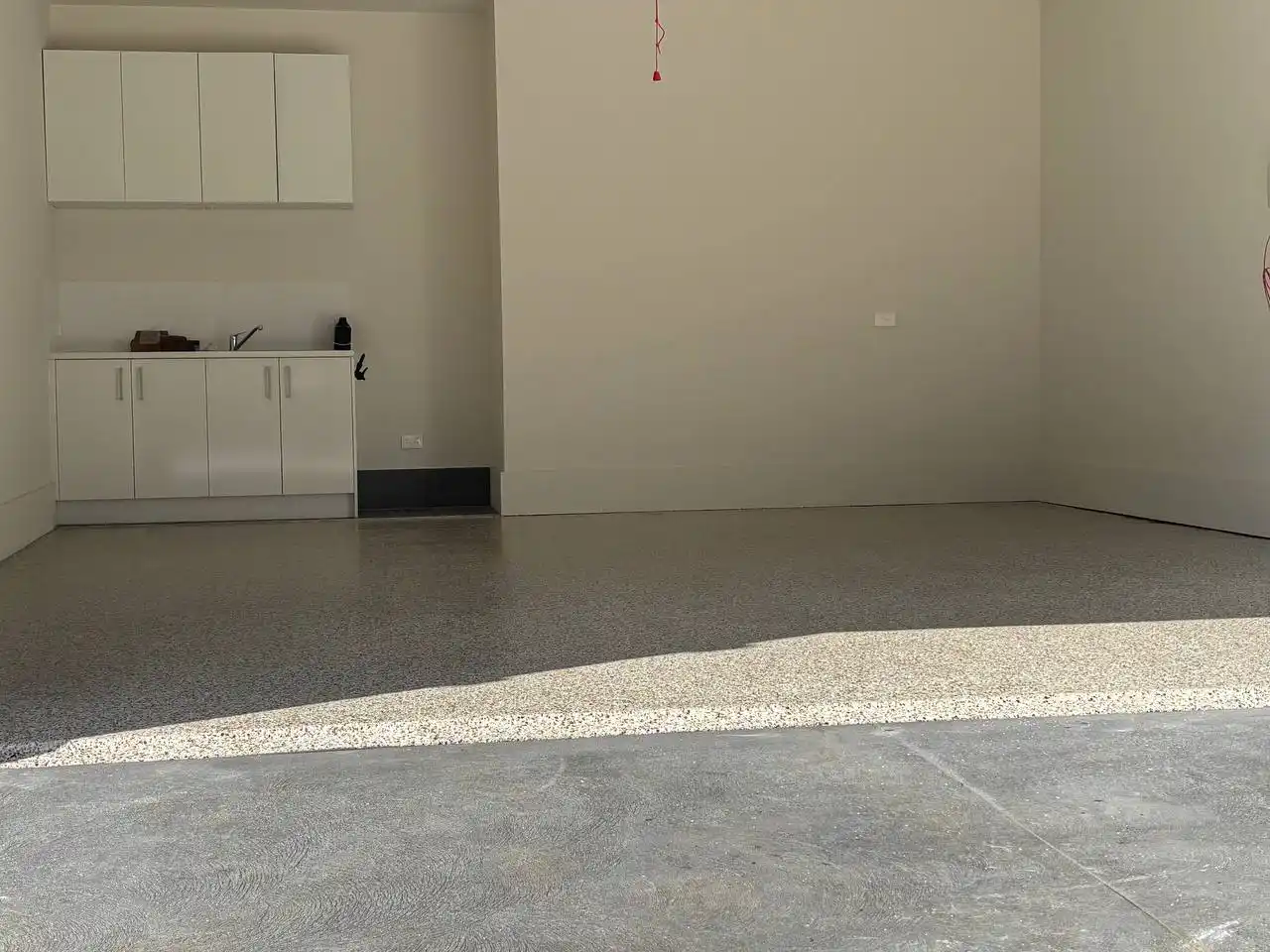
Most of our jobs are straightforward functional garages — park the car, keep the floor clean, done. Then there’s a smaller category of client building a genuine feature garage: a dedicated space for a collection, a restoration project, or simply a garage that’s meant to be shown off as much as used. We’ve done enough of these across Toorak, Brighton East and Hawthorn to know the brief is genuinely different, and the floor decisions that follow from it are too.
A feature garage is a different brief
In a daily-use garage, the floor’s job is to survive traffic, hide minor marks, and be easy to clean. In a display garage, the floor is part of the presentation — it sits directly under the car in every photo, it reflects the lighting rig, and it’s on show to anyone who walks in. That changes the priority order: appearance and light interaction move up, and pure toughness (while still important) moves down slightly, because a feature garage usually sees far less day-to-day abuse than a daily driver’s garage.
It also changes the conversation we have with clients. We spend more time talking about how the floor will look at 7pm under LED downlights than we do about chemical spill resistance, because that’s genuinely what the client cares most about getting right.
Gloss level and how it reads under lighting
Gloss level is the single biggest lever for how “showroom” a floor feels. A high-gloss topcoat gives the mirror-like reflection that makes a car collection look like it’s floating, and it’s what most people picture when they say “epoxy floor.” It genuinely does make a bigger visual impact under downlights or a lighting rig than a satin finish does.
It’s also the least forgiving finish for dust, tyre marks and footprints — a high-gloss floor shows every mark far more readily than a satin or matte one. For a garage that’s opened and photographed regularly but not lived in daily, that trade-off is usually worth it. For a garage that doubles as a real workspace between photo moments, a satin finish still looks sharp under good lighting while being noticeably easier to keep looking clean day to day.
Our advice: if you’re set on high-gloss, plan your cleaning routine (a soft microfibre dust mop before any event or photo, not just when it looks dirty) into how you use the space, rather than deciding after the fact that the maintenance is more than you expected.
Colour and flake choices that photograph well
Solid colour, flake, and quartz systems all read very differently on camera and in person, and the right choice usually comes down to what you want the floor to do relative to the cars sitting on it.
⚫
Solid dark colour
✨
Full flake broadcast
🎨
Custom flake blend
⚪
Light neutral base
If you’re still narrowing this down, our guide to choosing your finish and colour goes deeper into how different bases and flake densities actually look once installed, and our flake epoxy systems page covers the range of flake options available, from a light scatter to a hyper-dense broadcast.
Edge detail and how the floor meets the room
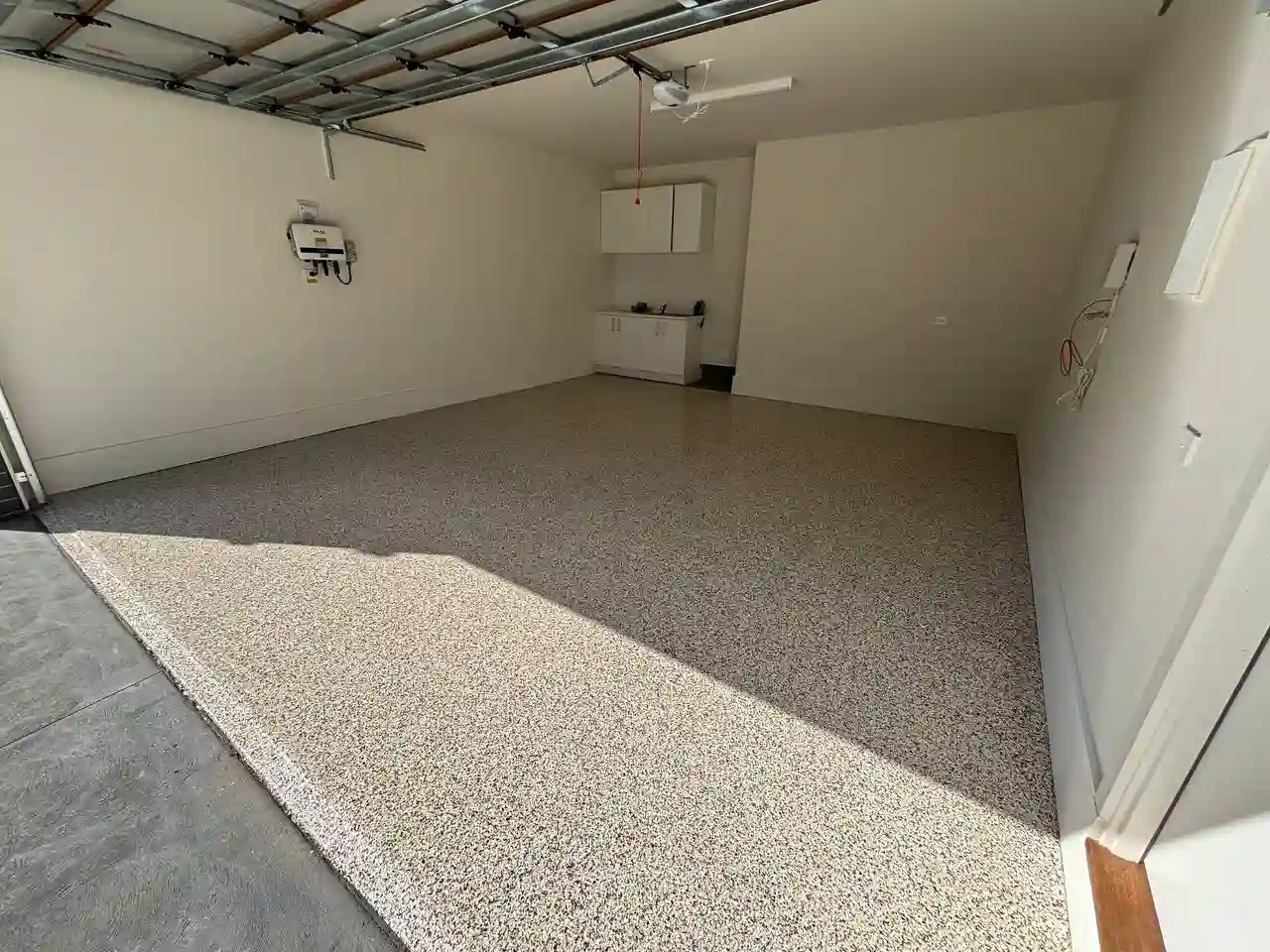
In a functional garage, nobody notices where the floor meets the wall, the door threshold, or a support column. In a feature garage, those transitions are exactly the sort of detail a discerning eye picks up on, especially in photos where a crisp, straight line reads as “considered” and a rough one reads as “afterthought.” A neat cove or straight-cut edge along the base of the walls, clean detailing around columns, and a properly finished threshold at the garage door all contribute more to the overall polish than people expect going in.
This is also where it’s worth thinking about the wall finish alongside the floor, even though walls aren’t epoxy’s job. A painted or clad wall in a colour that complements the floor’s base tone pulls the whole room together, while a mismatched wall colour can undercut an otherwise excellent floor. We’re happy to talk through how a chosen floor colour will sit against wall and ceiling finishes as part of the design conversation, since it’s a five-minute discussion that avoids a much bigger regret later.
Working with your lighting, not against it
A floor and a lighting plan should be designed together, not one after the other. High-gloss and metallic flake finishes bounce light around a room dramatically — great when it’s intentional, but it can wash out under the wrong colour temperature or create hot-spot glare directly under a downlight positioned poorly. If you’re planning a lighting upgrade alongside the floor (LED strip lighting, a feature pendant, spotlighting on a hero car), it’s worth finalising the lighting layout, or at least the general plan, before the floor colour and gloss level are locked in.
As a rule of thumb: warmer, dimmer lighting suits darker solid colours and reads more like a private lounge; brighter, cooler lighting suits lighter bases and denser flake and reads more like a showroom.
One detail that’s easy to overlook until it’s installed: reflective floors amplify colour casts from the light source itself. A cheap fluorescent tube with a slightly green-tinted output will show up in the floor’s reflection far more obviously on a glossy epoxy finish than it does on a matte concrete floor, sometimes making an otherwise well-chosen colour look off. If you’re investing in a feature floor, it’s worth pairing it with good-quality, consistent colour-temperature lighting rather than treating the lighting as an afterthought once the floor is already down.
Protecting a show floor without dulling it
The irony of a feature garage is that it often sees more heavy point-loading than a daily driver’s — trailer jacks, engine stands, low-profile jacks, and tool trolleys being wheeled around during a project. None of that has to damage a well-installed epoxy floor, but it pays to be deliberate about it.
- Use rubber or felt pads under jack stands and stationary equipment rather than setting steel feet directly on the floor.
- Roll trolleys and jacks rather than dragging them — dragging is what scuffs a glossy finish, not rolling weight.
- Keep a dedicated mat or drop sheet down during any messy mechanical work, even though the floor is chemical resistant — it’s about keeping the showroom look intact, not just protecting the coating itself.
- Address any chip or scratch early with a touch-up rather than letting it become the first of several — small damage is far easier to blend in on a feature floor while it’s isolated.
One thing to avoid: parking a hot trailer jack or engine hoist wheel in exactly the same spot for months. Sustained point pressure in one location is far more likely to leave a mark than the same equipment used and moved regularly.
Planning it properly
Feature garages are usually part of a bigger renovation — cabinetry, slatwall, signage, sometimes a mezzanine or viewing area — so sequencing matters. The floor should go in before wall-mounted storage and display fixtures are finalised, and before any car is moved back in permanently, so the whole room comes together as one finished space rather than a floor retrofitted around existing furniture.
Because these are usually one-off, considered spaces rather than a standard install, we’d always recommend getting an accurate quote based on an on-site look at your slab, lighting plan and design brief, rather than working from a generic per-square-metre figure. Our residential garage epoxy service covers everything from a straightforward single garage through to full feature builds like this.
If your collection includes a car on a hoist or lift, it’s also worth reading our piece on installing a hoist on an epoxy floor before the slab work is finalised — the sequencing there affects the floor plan too. And if chemical resistance around a project car is a concern even in a showcase space, our chemical resistance guide is worth a read.
Frequently Asked Questions
What's the best epoxy finish for a show-quality garage?
High-gloss flake or a solid dark colour are the most common choices for feature garages because they maximise reflection and contrast under lighting. The right pick depends on whether you want the floor or the car to be the focal point.
Does a high-gloss epoxy floor show marks more easily?
Yes, high-gloss finishes show dust, tyre marks and footprints more readily than satin or matte finishes. It’s a genuine trade-off for the stronger reflective look, so factor a quick dust-mop routine into how you use the space.
Can I add flake in a custom colour to match my car?
In many cases yes — flake blends can be customised to complement a specific paint colour or design brief, though availability depends on the flake range and lead time. It’s worth discussing during your on-site quote.
Will jack stands and trailer jacks damage an epoxy show floor?
Not if used sensibly — rolling rather than dragging equipment, and using rubber or felt pads under stationary jack stands, prevents most marking. Sustained point pressure in one spot for months is the main risk, not normal use.
Should the floor or the lighting be planned first in a feature garage?
Ideally they’re planned together, since gloss level and colour interact strongly with lighting temperature and placement. At minimum, settle a rough lighting plan before locking in the floor’s finish and colour.
Get your free on-site quote
We visit your garage, assess your slab, discuss your finish options, and give you a detailed written quote — specific to your floor, not a generic estimate. No call-out fee, no obligation.