
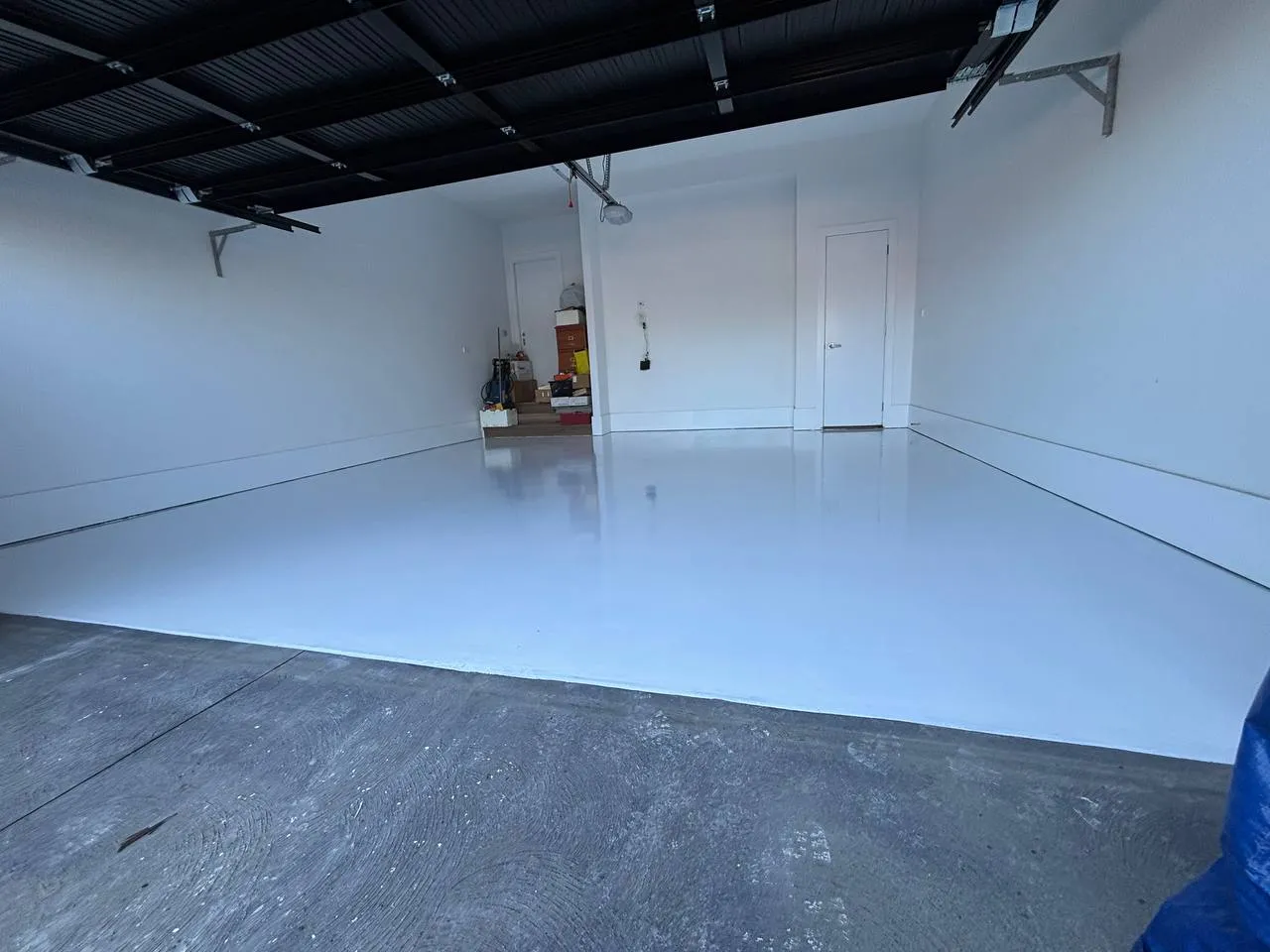
EVs change what a garage floor has to deal with — no more oil drips, but a charger, a cable, and an electrician who needs to be in the loop before the coating goes down.
How EV ownership changes what a garage floor needs to do
Electric vehicle uptake in Australia has moved from niche to mainstream fast, and Melbourne is one of the states leading that shift. The Electric Vehicle Council tracks this growth nationally, and anecdotally we’re seeing it play out in the jobs we quote — more homeowners mentioning a home charger, either already installed or planned, when we walk through their garage.
That shift changes what the garage floor is actually for. A traditional daily-driver garage floor has to cope with oil drips, brake dust, tyre marks and the odd fuel spill. An EV garage still needs to handle tyre marks and general wear, but the oil and fuel side of things mostly disappears. In its place, you get a permanently mounted charger, a cable that gets dragged across the floor every day, and — because it’s an electrical installation — a slightly different set of safety considerations around the coating itself.
None of this makes epoxy the wrong choice for an EV garage. If anything, we think it’s a better fit than bare concrete or a hardware-store paint. But there are a handful of things worth understanding before you get a floor and a charger installed in the same garage, especially if both are happening around the same time.
Worth noting: most EV-related garage floor damage we see isn’t from the vehicle at all — it’s abrasion and scuffing from the charging cable being dragged, coiled and dropped in the same spot every day. That’s a maintenance and layout issue, not a coating-chemistry issue.
Where the charger changes the floor brief
A home EV charger is usually wall-mounted, somewhere between knee height and shoulder height, positioned so the cable can reach the vehicle’s charge port without stretching across the whole garage. Where that unit goes has a direct effect on the floor plan:
- A dedicated parking position. Most EV owners park in roughly the same spot every time, near the charger. That spot sees more repeated wheel contact and more cable traffic than the rest of the garage — worth mentioning to us so we can make sure the finish there is fit for the job, particularly if you want a lighter colour that would otherwise show scuffing more.
- Conduit or cable runs. If power is being run to the charger through or across the slab rather than down an adjacent wall, that conduit work needs to happen before the floor is coated, not after. Cutting into a finished epoxy floor to retrofit conduit is avoidable extra cost and an untidy patch repair.
- Clearance around the charger base. Some charger brackets are floor-mounted or have a base plate that sits near floor level. We coordinate with your electrician (or ask you to) so we know exactly where any floor-level hardware will sit before we start.
The practical upshot is simple: tell us about the charger — installed, planned, or “probably one day” — at the quote stage, the same way you’d tell us about a car hoist or built-in cabinetry. It changes very little about the coating itself, but it changes the sequencing and sometimes the layout.
Cable management and abrasion at floor level
Charging cables are heavier and stiffer than most people expect, and they spend a lot of time on the floor — coiled up when not in use, dragged out and back for every charge, sometimes left lying across the slab overnight. Over months and years, that’s real abrasive traffic concentrated in one path across the floor.
A properly cured epoxy system handles this well. It’s far more abrasion-resistant than bare concrete (which will dust and wear under repeated dragging) and than a thin painted finish (which scuffs and thins out quickly under the same treatment). It’s not indestructible, though — a cable dragged with grit or gravel caught underneath it will still scratch a gloss finish over time, the same way it would scratch a car’s paint.
- Use a wall-mounted cable hook or holster near the charger so the lead isn’t left coiled on the floor between charges.
- Sweep grit out of the charging zone regularly — it’s the grit, not the cable itself, that does most of the fine scratching.
- If you want extra peace of mind in a high-traffic charging spot, a satin or lower-gloss finish will show fine scuffing less than a high-gloss one.
Cable management and abrasion at floor level
Genuine risk point: if you plan to install a car hoist, jack stands for regular DIY servicing, or store a heavier vehicle like a 4WD or a trailer, get clarity on the tile product’s specific load rating before committing — this is exactly the scenario where the gap between the two options is widest.
Where our work and the electrician’s work overlap is mostly about timing and moisture. A few practical points:
- Concrete needs to be properly cured and tested dry before we coat it — the same requirement as any garage floor, EV or not. If your garage is a new build with a charger going in soon after the slab is poured, that moisture testing matters even more, since a garage doubling as a charging bay isn’t somewhere you want dampness working its way up through a coating later.
- If your garage occasionally gets wet underfoot (a hosed-down car, wet shoes, rain blown in through an open roller door), a coating with genuine slip resistance in that zone is worth discussing, the same way we’d flag it for a wash bay or a floor near a drain.
- Epoxy itself doesn’t conduct electricity, so the coating isn’t a safety risk around a charger. The things that matter for electrical safety — correct circuit protection, earthing, cable condition — sit entirely with the electrical installation, not the floor finish.
Why non-conductive, seamless flooring is a genuine plus for EV garages
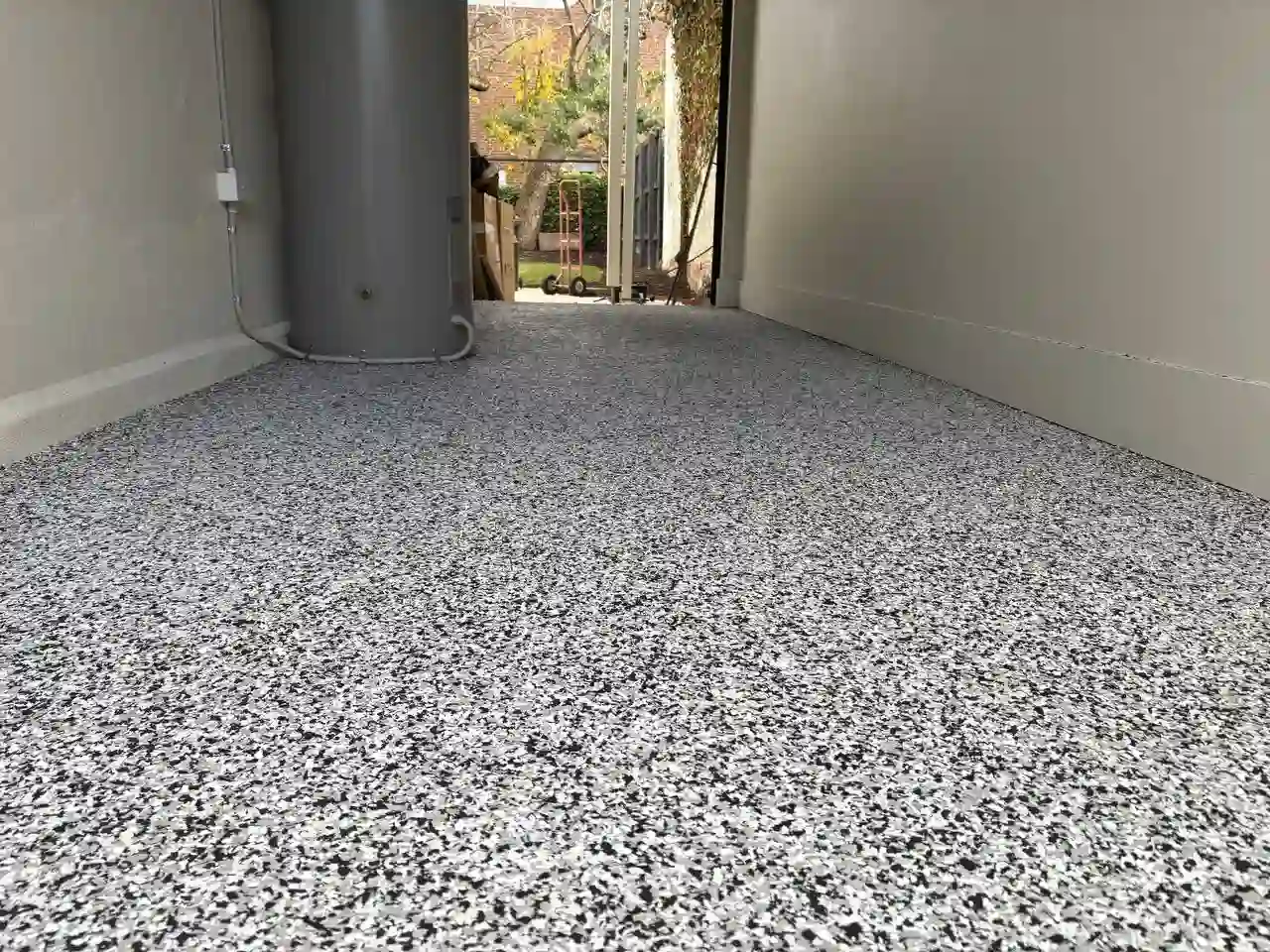
This is one of the few places where epoxy has a straightforwardly practical edge for an EV garage, without us needing to oversell it. A cured epoxy floor is:
Non-conductive
Easy to keep clear
No grout lines or gaps
Reflects light well
None of this is unique to EV owners — these are the same reasons epoxy suits any garage that gets used, not just parked in. But for an EV garage specifically, “easy to keep debris-free” is more than a nice-to-have. A charging bay is somewhere you and the cable are on the floor every single day, so a surface that stays clean and grippy underfoot earns its keep.
Getting the sequencing right with your electrician
The single most common thing we ask EV owners at the quote stage is simply: is the charger installed yet, and if not, when? Getting the order of trades right avoids rework on both sides.
- Electrician assesses the switchboard and circuit path first. They’ll confirm whether the existing switchboard has capacity, where the charger will sit, and whether any cabling needs to run through or near the slab.
- Any conduit or in-slab work happens before coating. If cabling is being chased into the slab or run along the floor-wall junction, that’s done before we arrive, not after.
- We coat the floor. With a clear brief on where the charger and its cable path will be, we can make sensible calls on colour, finish and any extra grip in the charging zone.
- Charger is mounted and commissioned. Wall-mounted units generally don’t touch the floor at all, so this step rarely affects the coating once it’s cured.
If the charger is already installed and you’re coating an existing garage floor around it, that’s straightforward too — we simply work around the unit and its cable run, the same way we’d work around a fixed workbench or shelving.
Cost and process — what's actually different for an EV garage
Honestly, not much. The coating system itself — primer, base coat, broadcast if you’re going with a flake finish, and a topcoat — is the same whether or not there’s a charger on the wall. How pricing is actually calculated comes down to floor area, floor condition and system choice, not whether there’s an EV in the driveway.
The two things that can add a little coordination time (not necessarily cost) are:
- Scheduling around an electrician if both jobs are happening close together — we’re happy to liaise directly if that’s easier for you.
- A small allowance for extra prep or patching if conduit has been chased into an older slab and needs to be reinstated flush before coating.
If you’re weighing up whether to go with a flake epoxy system or a solid colour for an EV garage, it’s largely the same decision as for any other garage — see choosing your finish and colour for the full breakdown. If you’re also planning a hoist or lift in the same space, our guide on installing a car hoist on an epoxy garage floor covers a very similar coordination problem — get the other trade’s requirements locked in before the floor goes down, not after.
For most EV owners, this is a straightforward residential garage epoxy service job with one extra conversation about where the charger sits. It’s worth raising early rather than as an afterthought, and if you’re not sure yet where the charger will go, that’s fine too — book a free on-site assessment and we can talk through both at once.
Frequently Asked Questions
Is epoxy flooring safe to use in a garage with an EV charger?
Yes — cured epoxy is non-conductive and doesn’t pose an electrical safety risk around a charger. The safety of the installation itself (wiring, earthing, circuit protection) is entirely the electrician’s responsibility, not the floor coating’s.
Do I need to coat my garage floor before or after installing an EV charger?
Before, where possible. If any cabling or conduit needs to run through or across the slab, that work should happen before the floor is coated so we’re not cutting into a finished surface afterward. Wall-mounted chargers that don’t touch the floor can generally be installed either before or after.
Does an EV charging cable damage epoxy flooring?
Not on its own, but repeated dragging with grit caught underneath the cable can cause fine scratching over time, similar to how grit scratches a car’s paint. Keeping the charging area swept and using a wall-mounted cable hook largely avoids this.
Do I need a special epoxy system for an EV garage?
No — the same primer, base coat and topcoat systems used in any residential garage suit an EV garage fine. The main consideration is layout and sequencing around the charger, not a different coating chemistry.
Does an epoxy floor help keep an EV charging area cleaner?
Yes, in a practical sense — a seamless, sealed epoxy floor has no grout lines or gaps for cable grit and dust to collect in, and it’s quick to sweep or mop, which matters in a spot you’re walking across daily to plug in a charger.
Should I tell my epoxy installer about a planned EV charger?
Yes, even if it’s not installed yet. Knowing a charger is planned lets us plan the layout, colour and any extra grip in that zone sensibly, and avoid a situation where conduit work has to be retrofitted through a finished floor.
Coating an EV garage in Melbourne?
Tell us about your charger — installed or planned — and we’ll factor it into a straightforward, no-obligation quote.