
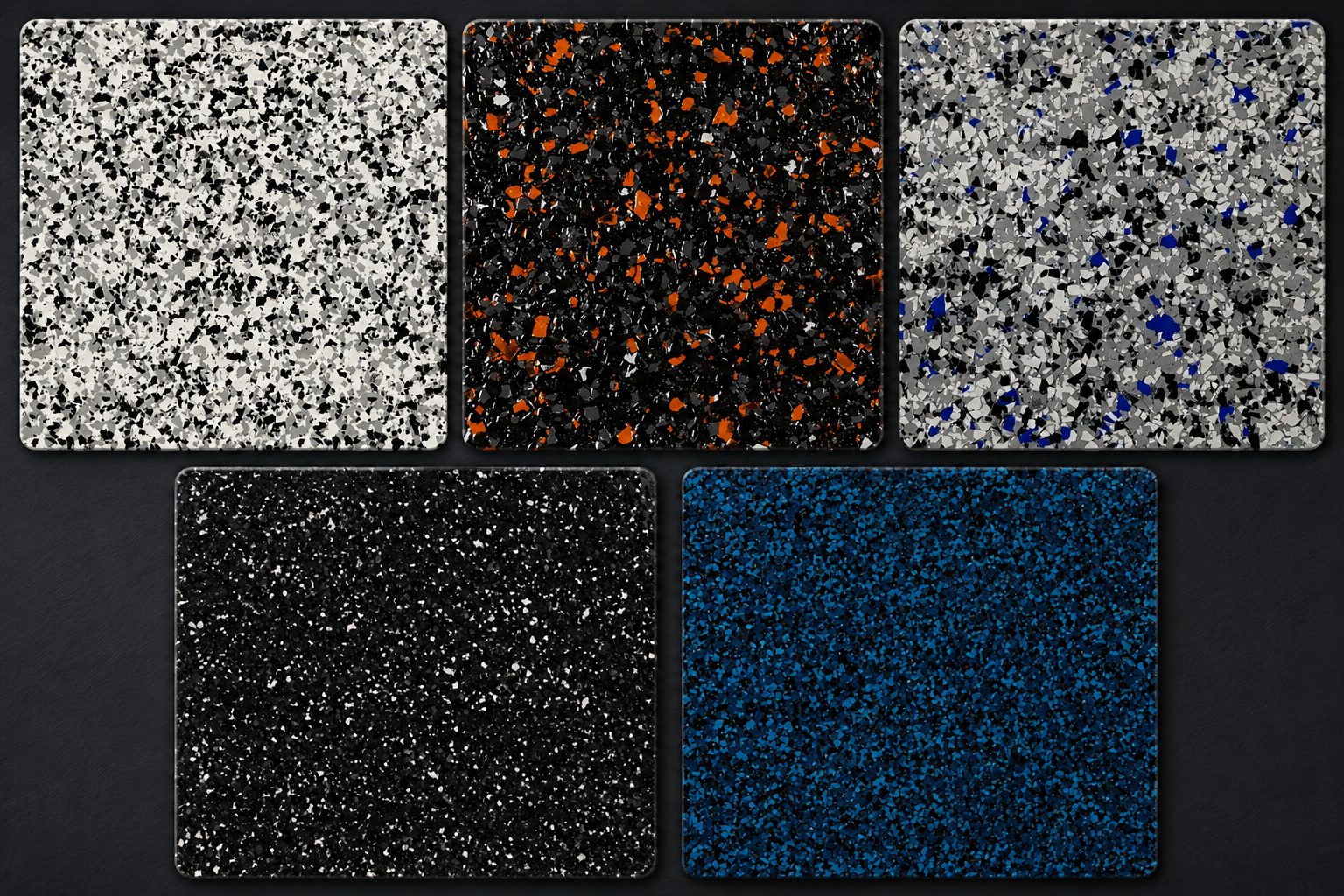
Colour is the one decision every homeowner second-guesses after the job is done. Here’s what actually determines whether you’ll love your floor in five years — not just on installation day.
Most people ring us already sold on epoxy. What stalls them is the next question: what colour do I actually get? It’s a fair thing to get stuck on — unlike paint, you’re not repainting this in three years if you change your mind. A garage floor is one of the few surfaces in a home installed once and lived with for a decade or more, so it’s worth ten minutes of proper thought rather than a snap decision off a sample chip in a showroom.
This guide isn’t a trend piece. It’s the practical version — the factors that actually decide whether a colour choice still looks good after two winters, a few oil changes and however many bikes get wheeled over it.
The colour options you're actually choosing between
Almost every colour conversation comes down to one of four systems. We install all four, so there’s no bias here toward whichever is easiest to sell — the right one depends entirely on how the garage gets used.
Solid colour epoxy
One flat, uniform colour across the whole floor — the cleanest, most contemporary look, and the easiest to picture before installation because what you see in the sample is exactly what you get. It’s also the least forgiving option: dust, tyre marks and small drips show up faster on a single flat tone than on anything with texture or blend.
Flake blend systems
This is what most Melbourne garages end up with, and it’s the option with the most room to actually design around your space. Our flake epoxy systems come in three depths:
- Partial flake — base colour stays visible with flake scattered lightly through it. More design control, still shows some marking.
- Full flake — flake broadcast to full coverage, so the base colour is really just an undertone. Hides far more day-to-day wear.
- Hyper flake — a dense, multi-layered blend for a busier, premium finish. This is the one that hides almost everything, which is why workshops and daily-driver garages lean toward it.
Quartz epoxy
Coloured quartz aggregate broadcast into the system for extra abrasion resistance as well as colour. More of an industrial look, and it tends to come up in commercial garage flooring conversations more than home garages — though a few clients have used it at home specifically for that tougher, workshop aesthetic.
Worth knowing: colour and system aren’t separate decisions — the flake blend you pick largely is the colour. A “storm grey with silver and charcoal flake” reads completely differently to a “storm grey” solid pour, even though the base tone is identical.
What we're installing most across Melbourne right now
No two garages are the same, but there are clear patterns in what people are actually choosing on the job:
Storm Blue
Popular in bayside & coastal suburbs

Storm Grey
Resale-neutral, works with any cabinetry
Black + silver fleck
Feature garages, car enthusiasts

Charcoal + flake
Most requested — hides everything, ages well
Grey, in some form, is still the clear favourite — not because it’s safe, but because it’s the tone that best disguises everyday garage life (tyre residue, dropped tools, general dust) while still looking considered rather than industrial.
Why colour is a practical decision, not just a look
Hiding stains and tyre marks
A multi-tone flake blend in a mid-to-dark base will camouflage day-to-day marking far better than any solid colour, light or dark. If the garage is doing real work — trades vehicles, a workshop bench, kids’ bikes — this is usually the deciding factor over anything else.
Light and heat
Garages without windows rely entirely on artificial light, and a lighter floor reflects noticeably more of it back into the room — worth factoring in if the garage doubles as a workshop. On the flip side, garages with roller doors facing north or west get direct sun for part of the day, and pigment quality matters here: as we cover in our guide to how long your floor will last, a UV-stable topcoat is what actually stops colour fading or yellowing over time, regardless of which shade you pick.
Slip resistance isn’t just about colour, but it’s connected
Textured finishes like flake and quartz add genuine grip under the AS/NZS 4586 slip-resistance standard, on top of whatever colour they come in — worth raising if the garage gets wet from cars, hoses, or Melbourne’s weather tracking in.
Resale and neutrality
If there’s any chance of selling in the next five to ten years, this matters more than people expect — a bold or unusual colour can read as “personal taste” to a buyer walking through, while greys and charcoals tend to photograph well and suit almost any car, storage system or décor added later. It’s one of several reasons epoxy shows up as a value-add in our full list of benefits of garage flooring generally.
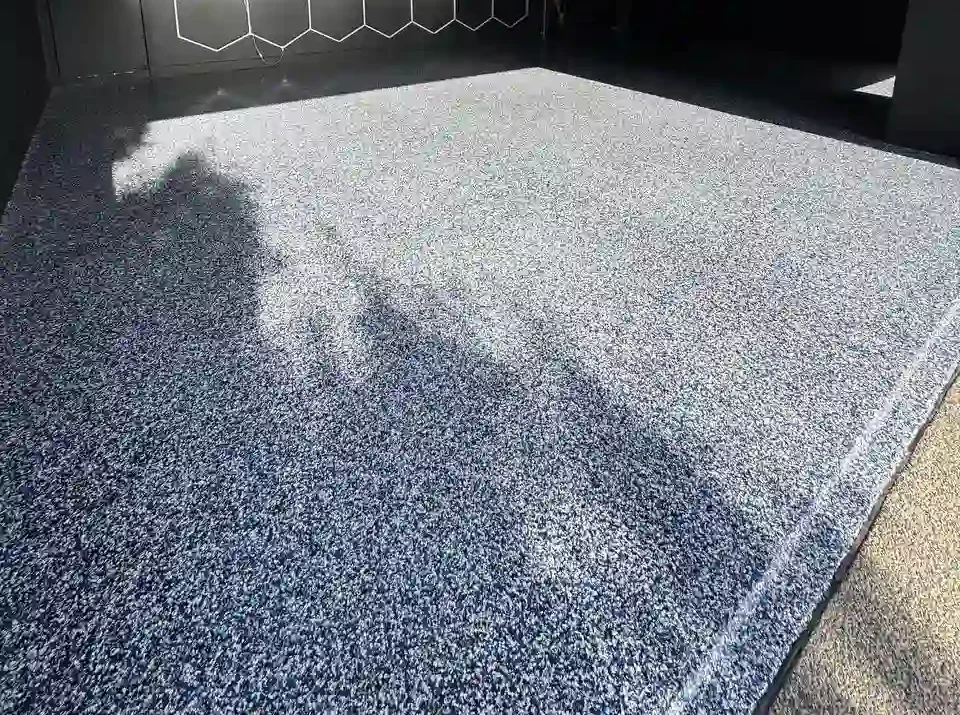
Combinations that hold up well
| BASE COLOUR | FLAKE BLEND | BEST SUITED TO |
|---|---|---|
| Slate Grey | Silver / Charcoal / White | Family garages — daily use, good at hiding marks |
| Charcoal | Black / Grey / White speckle | Workshops and heavy daily use |
| Dove Grey | Blue / Grey / White (light) | Windowless garages needing reflected light |
| Black | Silver / White fleck | Feature garages, car enthusiasts, showroom look |
| Storm Blue | Grey / White | Coastal and bayside homes |
Melbourne-specific things to think about
- Custom or premium blends cost more — hyper flake and multi-colour custom mixes use more material and labour time, which is one of the variables in how pricing is actually calculated.
- See it in your own garage’s light before committing. Fluorescent tubes, LED downlights and daylight through an open door will all shift how the same sample looks — this is exactly why we bring physical boards on site as part of how to get an accurate quote, rather than relying on a screen or a swatch under showroom lighting.
- Older concrete slabs common in Melbourne’s established eastern and northern suburbs sometimes have surface unevenness that shows up more under solid colour than under a broadcast flake finish.
The mistakes we see most often
- Choosing off a phone photo or a tiny chip rather than a full-size board, in the actual garage.
- Going too light for a working garage — beautiful on day one, visibly marked within a few months of regular tool and vehicle use.
- Not checking it under artificial light — a colour picked in daylight can look completely different under the garage’s actual globes at night.
- Ignoring what’s already in the space — cabinetry, shelving, the car itself. The floor is the biggest single surface in the room and it needs to sit with what’s already there, not fight it.
How to actually decide
- Start with how the garage is used, not how it looks in your head. A daily-driver, tool-heavy garage should lean toward a mid-to-dark flake blend regardless of taste, purely because it will still look good in year three. A feature garage, low daily wear, can afford to be bolder. From there, get physical sample boards into the actual space, look at them morning and night, and only then make the call — ideally as part of a proper on-site assessment rather than a guess from a brochure. If you’re still weighing it up against doing this yourself, our breakdown of DIY vs professional installation covers where colour consistency tends to go wrong on DIY kits specifically.
Frequently Asked Questions
What is the most popular epoxy garage floor colour in Melbourne?
Charcoal and storm-grey tones with a flake blend are the most requested, mainly because they hide everyday marking well and suit almost any home exterior or interior — not because they’re the only good option.
Does epoxy garage floor colour fade over time?
Good-quality systems with a UV-stable topcoat hold their colour well for 10+ years. Fading is almost always a sign of a lower-grade product or a topcoat that wasn’t UV-stable, rather than the colour itself being the problem.
Can I get a custom colour blend for my garage floor?
Yes — flake blends can be mixed to match a specific look, though fully custom blends typically cost more due to the extra material and labour involved compared to a standard blend.
Do darker epoxy floors get hotter in summer?
Direct sun through an open roller door can warm any dark surface, epoxy included, but it’s a minor, short-lived effect underfoot rather than a lasting heat problem — good ventilation and a UV-stable topcoat are what matter more long-term.
Is a light or dark garage floor better for hiding stains?
Mid-to-dark, multi-tone flake blends hide oil marks, tyre residue and general wear far better than either very light or completely solid colours.
Does colour choice affect the overall cost of an epoxy garage floor?
Standard solid colours and standard flake blends are priced similarly. Premium blends like hyper flake, or fully custom colour mixes, generally cost more — worth confirming as a line item on any quote.
Get your free on-site quote
We visit your garage, assess your slab, discuss your finish options, and give you a detailed written quote — specific to your floor, not a generic estimate. No call-out fee, no obligation.